Common Signs of a Leaking Roof (and What to Do)

The most common signs of a leaking roof are brown or yellow stains on ceilings and walls, damp patches, a musty smell, peeling paint, and dripping or the sound of water. In the loft you may see daylight through the roof, wet timber or damp insulation. Outside, look for slipped or missing tiles and blocked gutters. Catch it early and the fix is cheap. Leave it and water rots the timber underneath.
A roof leak rarely announces itself. Most start small and quiet, a slow drip finding its way through a cracked tile or a bit of tired flashing, long before you see a drop of water indoors. By the time a stain appears on the ceiling, water has often been getting in for weeks.
The good news is that a leaking roof usually gives you warning signs, if you know where to look. Here are the ones to watch for, inside, in the loft, and on the roof itself.
Signs of a leaking roof inside your home
Indoors is where most people first notice a problem. Keep an eye out for:
- Brown, yellow or copper-coloured stains on ceilings or walls, often in a ring shape.
- Damp patches that feel cool and spread slowly, especially after rain.
- A persistent musty or damp smell in a room or on the landing.
- Paint or wallpaper that bubbles, blisters or peels.
- Black mould appearing in corners, around ceilings or on walls.
- A sagging or bulging patch on the ceiling, which means water is pooling above and needs urgent attention.
A stain that keeps growing, or comes back after a dry spell, is a strong sign the roof is still letting water in rather than a one-off spill from above.
Signs in your loft or attic
Your loft is the best place to catch a leak early, before it ever reaches the rooms below. On a bright day, or during heavy rain, go up and look for:
- Daylight coming through the roof where it should be solid.
- Wet or dark patches on the underside of the felt, the timbers or the rafters.
- Damp, matted or discoloured insulation.
- Water tracks, the tell-tale dark lines where water has run down a beam.
- A damp, earthy smell, or timber that looks stained even when dry.
Water travels, so the wet spot in the loft is often not directly under the hole. That is one reason finding the true source is a job for someone who knows what they are looking at.
Signs on the roof itself, from the ground
You do not need to climb up, and you should not. A lot can be spotted from the garden or a window with a decent pair of eyes or a phone zoom:
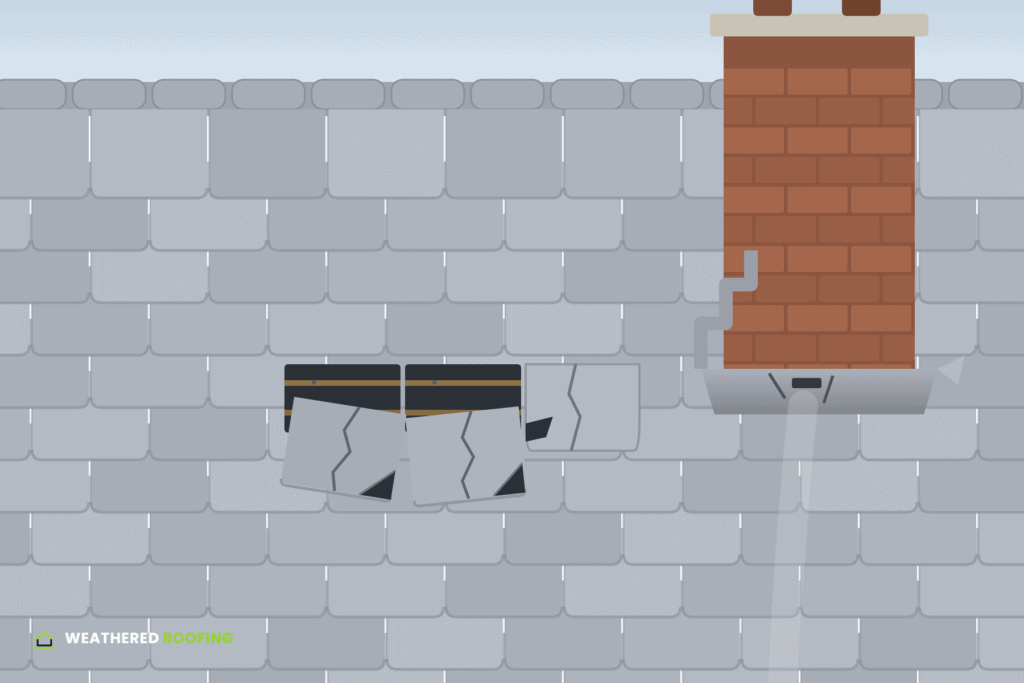
- Slipped, cracked or missing tiles or slates.
- Damaged or lifting flashing, the metal strips around chimneys, valleys and where the roof meets a wall.
- Heavy moss or debris build-up holding water against the tiles.
- Blocked or overflowing gutters, which push water back under the roof edge.
- A dip or sag in the roof line.
- On a flat roof, blistering, splits, or pools of water that sit for days after rain.
Flat roofs have their own set of warning signs. Our guides to common flat roof problems and how to find and fix a flat roof leak go into these in more detail.
Why a small leak turns into a big bill
It is tempting to put a bucket down and forget about it. The problem is what water does once it is inside. It soaks into rafters and joists and rots them. It ruins insulation, so your home costs more to heat. It feeds mould, which is bad for the house and for the people in it. And if it reaches wiring, it becomes a safety risk.
A single slipped tile fixed this month might cost a couple of hundred pounds. Left for a year, the same leak can mean replacing timber and plasterwork and redecorating a room. Regular roof inspections are the cheapest way to keep small problems small.
What to do if you think your roof is leaking
If you spot the signs, here is a sensible order to work through:
- Contain the water. Put a bucket down, and move furniture, electricals and anything valuable out of the way.
- If a ceiling is bulging with trapped water, a small hole to let it drain into a bucket is safer than letting it burst. Stand clear as you do it.
- Check the loft in daylight and, if you can, during rain, to see where water is getting in.
- Take photos of everything, indoors and in the loft. These help a roofer and, if it came from a storm, a possible insurance claim.
- Do not climb onto the roof yourself. Most accidents happen to people who go up untrained.
- Call a roofer. For an active leak in bad weather, ask about emergency roof repair.
Once the roof is dry, a proper repair can go in. It often costs less than people fear. See what a repair usually costs for a rough idea before you call.
Could it be something other than the roof?
Not every damp patch is a roof leak. Condensation in a cold loft, an overflowing gutter, failed pointing on a chimney, or a plumbing leak in an upstairs pipe can all look similar from inside. A roofer will trace it to the real source rather than guess, which matters, because fixing the wrong thing just wastes money. If you want a hand, our roof repairs team can take a look.
Frequently asked questions
Condensation tends to be spread evenly, worse in cold weather and often around windows. A roof leak usually shows as a defined stain that grows after rain. Checking the loft during heavy rain is the clearest test, and a roofer can confirm the source.
Damp and musty, a bit earthy. If a room or the loft smells like that even when it looks dry, water has likely been getting in and sitting in the timber or insulation.
A slow stain is not usually an emergency, but water coming in fast, a bulging ceiling, or a leak near electrics all need dealing with quickly. In those cases, contain the water and call for an emergency repair.
You can look for signs from inside and in the loft, which helps. Finding the exact entry point on the roof is harder, because water travels before it drips, and it is not safe to climb up. Leave the roof itself to a professional.
A minor leak, such as a slipped tile, is often a few hundred pounds. The cost rises with the cause and the access needed. Our minor roof repair cost guide gives typical UK figures.
Talk to Weathered Roofing
We are a family-run roofing firm based in Deal, working across Deal, Dover, Sandwich, Kingsdown, Folkestone, Canterbury and the rest of East Kent since 1997. We handle flat roofs, tiled and slate roofs, repairs, leadwork and full re-roofs.
Call us on 07379 187815 for a free, no-pressure quote, or send us a message through our contact page.